






Natalia Pereira: a birth – I can't stop
2024, Institue of Contemporary Art Santa Fe, November 8 – January 19
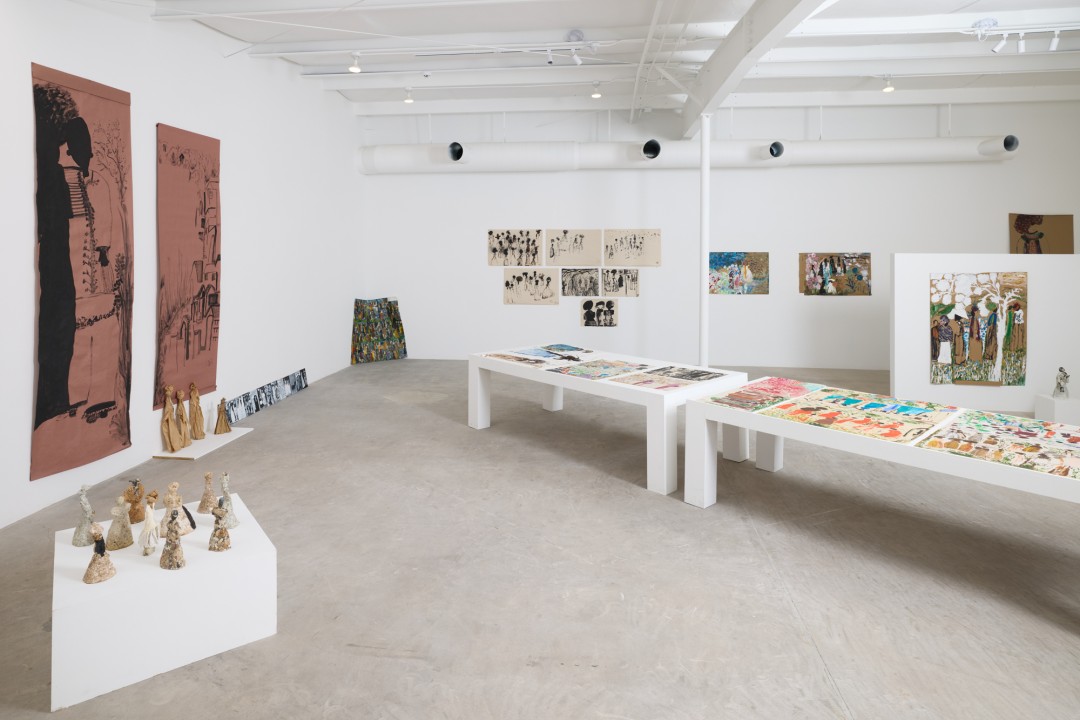
In fall 2024, the Institute of Contemporary Art Santa Fe hosted Brazilian American artist and award-winning chef Natalia Pereira for a two-and-a-half-month residency and exhibition. Titled a birth – I can’t stop, the project collapsed the boundaries between artistic practice and exhibition-making. Pereira began working in an empty gallery, transforming it first into an active studio and gathering place and, gradually, into a completed exhibition. Visitors were invited to return throughout the residency and witness the work, and the exhibition itself, coming into being.
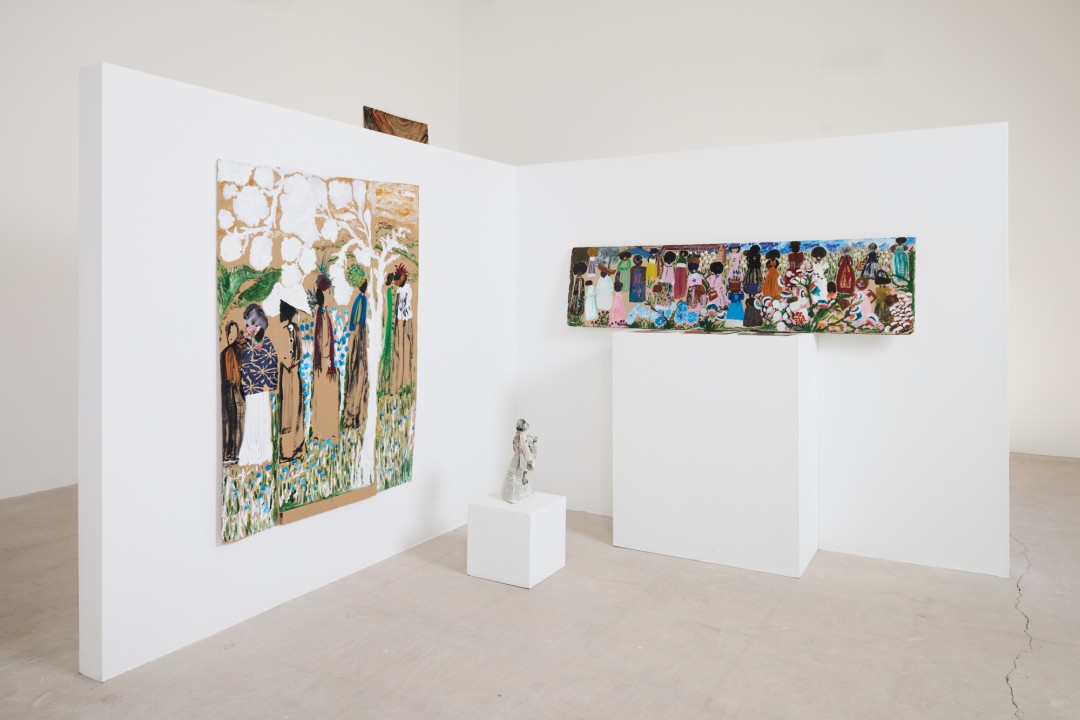
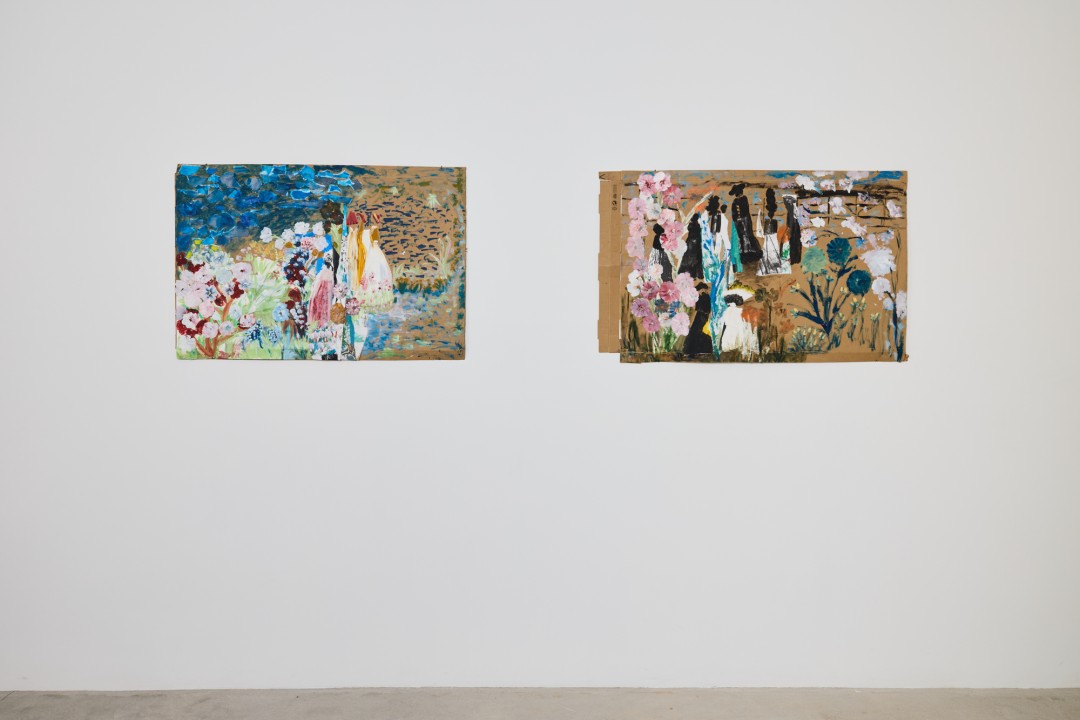
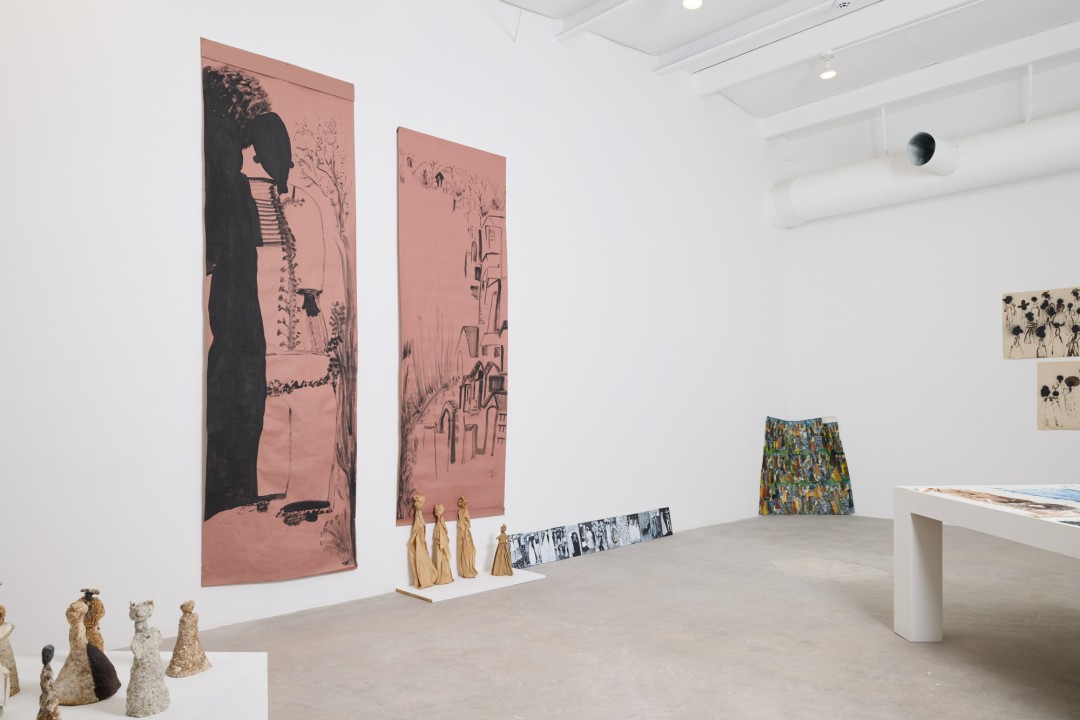
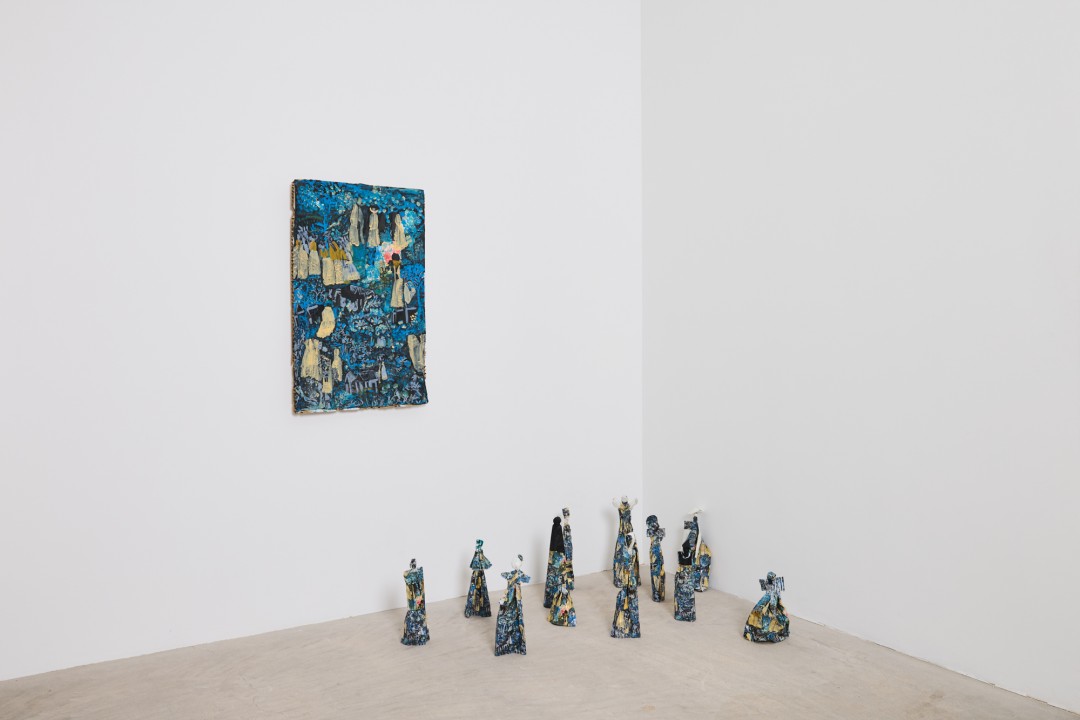
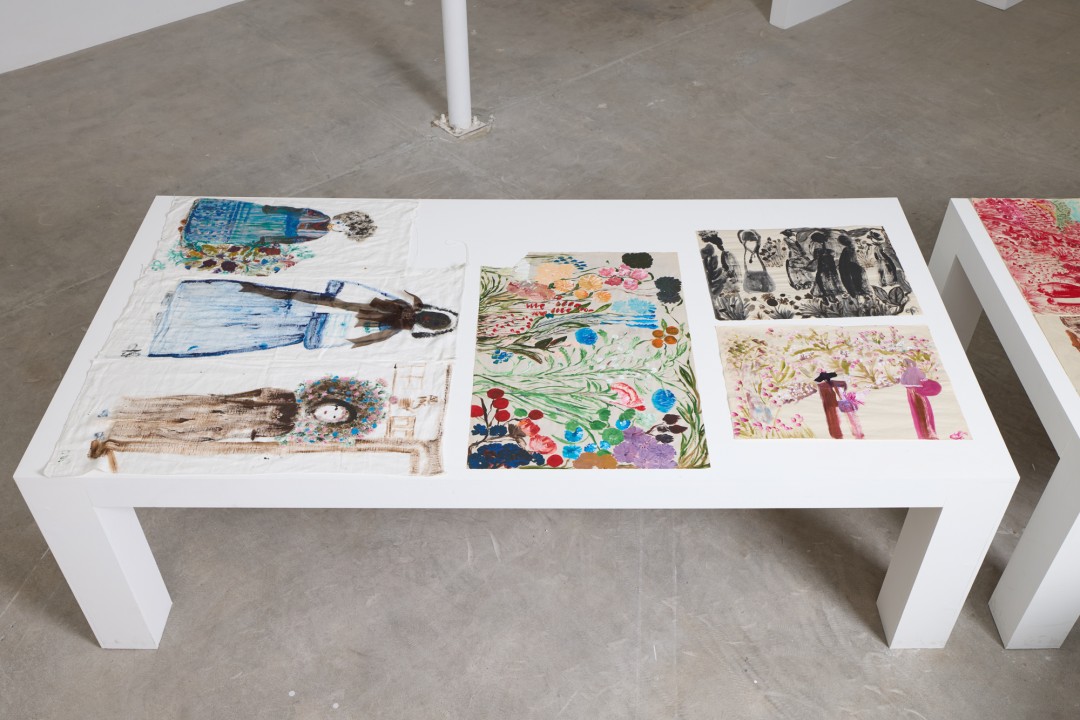
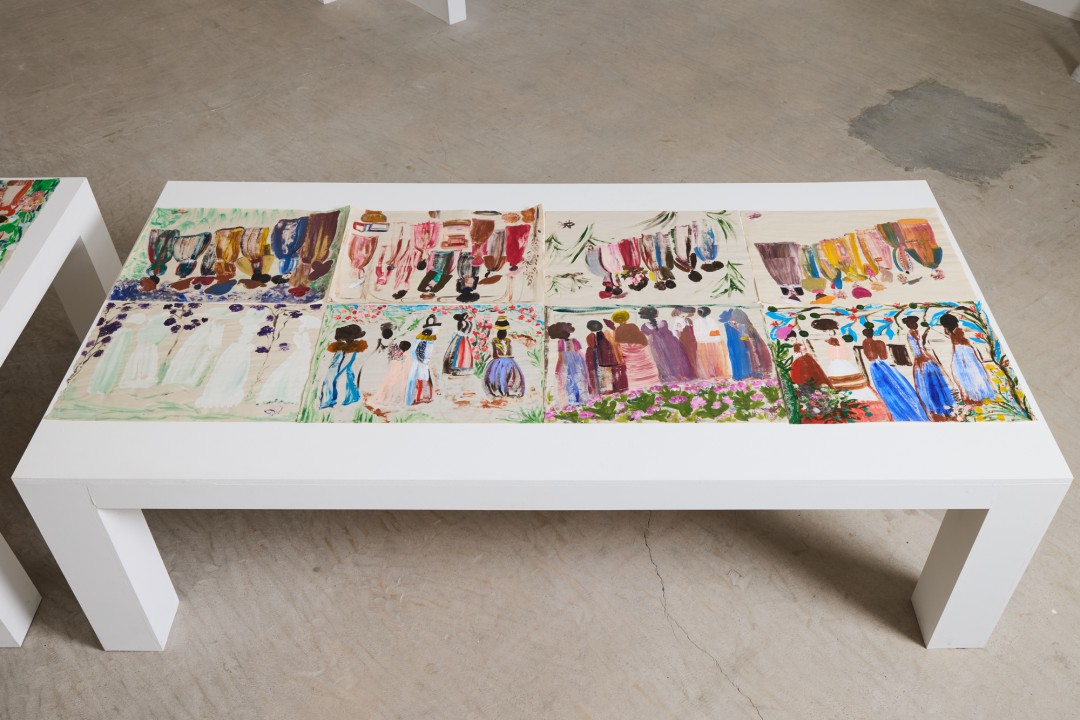
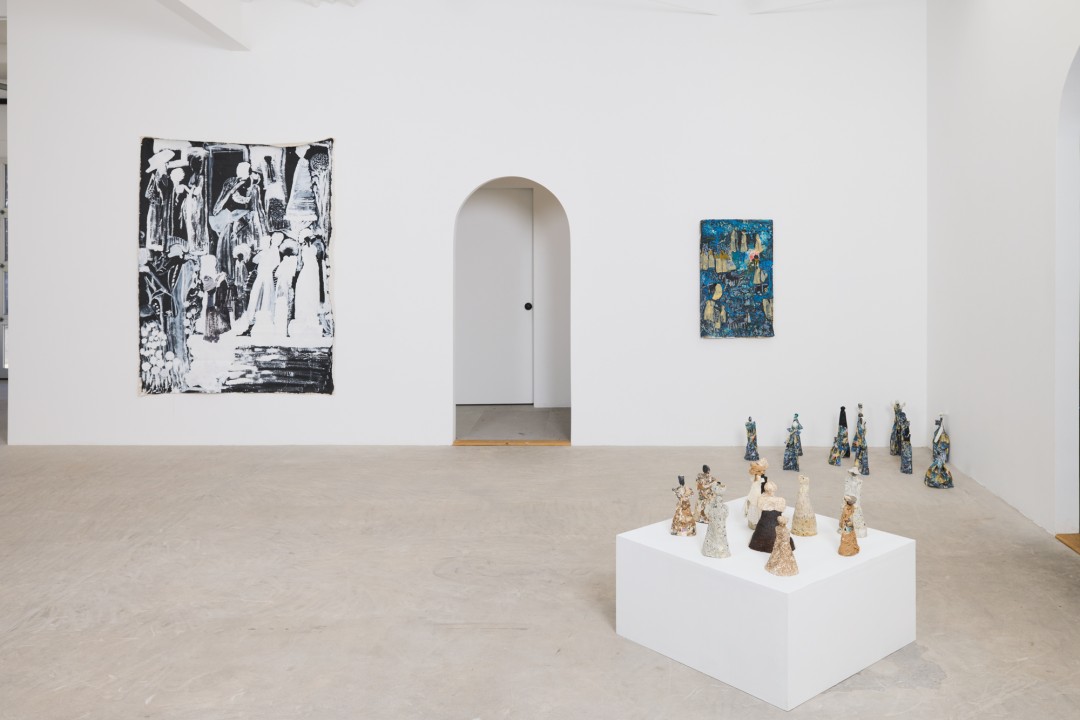
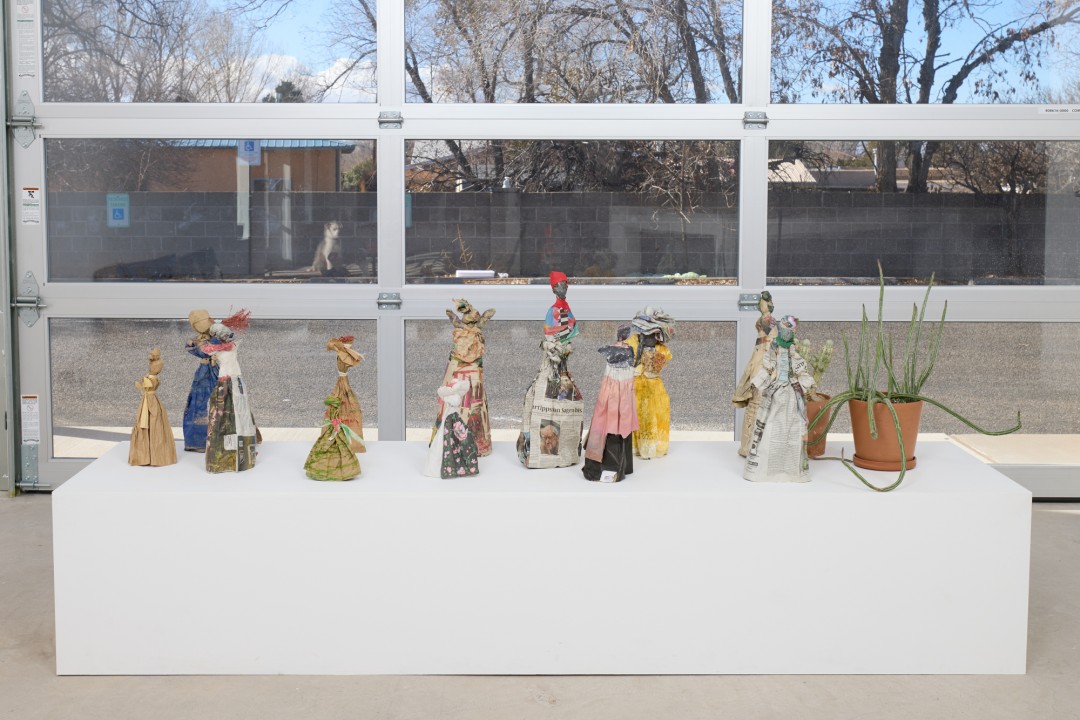
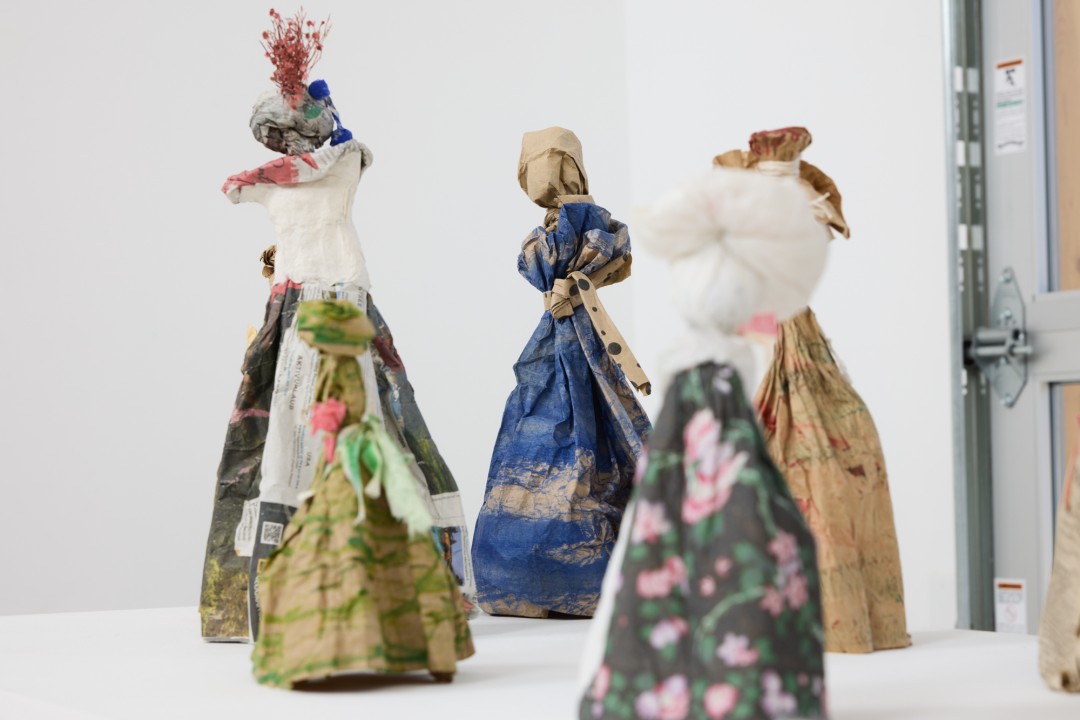
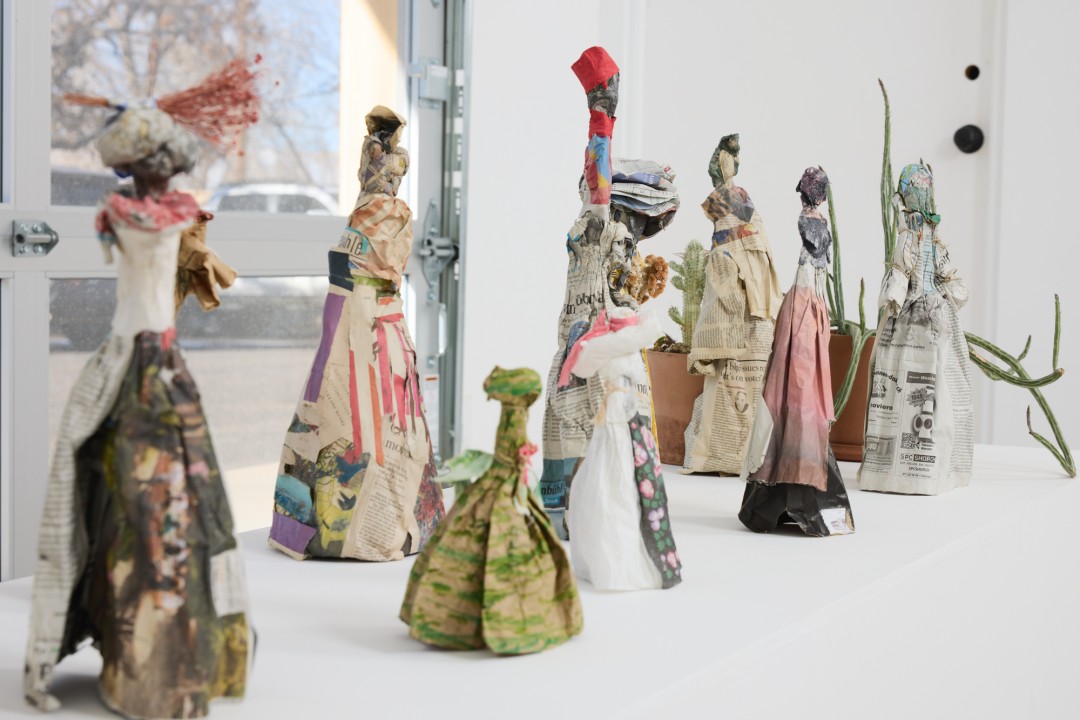
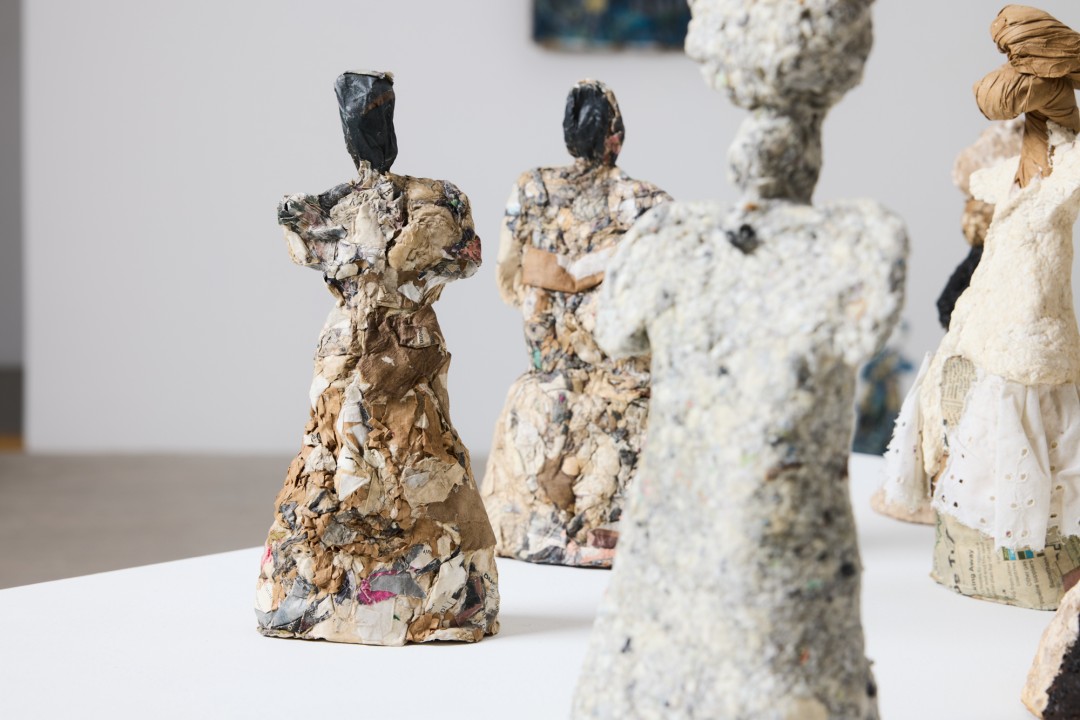
Pereira’s drawings, paintings, and sculptures, primarily created on found paper, depict silhouetted figures she describes as medicine women, teachers, and beings who hold both questions and answers. These figures belong to what she calls the AD 105 Society, named for the year associated with Cai Lun’s standardization of papermaking in China. Pereira connects paper to the body through the documents that mark the beginning and end of a human life: the birth certificate and the death certificate. Between these two points, the body expresses, records, creates, and transforms experience.
In Pereira’s hands, paper becomes a living surface, at once delicate, resilient, and charged by its previous use. Frenetic yet precise lines accumulate into dense fields of color from which individual forms emerge. Abstracted but familiar, the figures occupy a space between spirit and matter, vulnerability and power. The histories carried by the found paper remain present in each work, making transformation both the exhibition’s subject and the material process through which it was produced.
Pereira’s practice as a chef was integral to the project’s curatorial structure. Originally from Minas Gerais, Brazil, she draws upon culinary traditions shaped by African, Indigenous South American, and European histories. Her Los Angeles restaurant, Woodspoon, was named one of the Los Angeles Times’ best restaurants in 2021 and 2022, received a Michelin Bib Gourmand in 2022, and earned Pereira recognition as a James Beard Award semifinalist for Best Chef: California.
The exhibition extended beyond the gallery through a series of dinners, tastings, lectures, performances, and intimate public gatherings. Each dinner was organized around a locally sourced or foraged ingredient, which became a way of connecting Pereira’s artistic and culinary practices to the people, histories, and ecological systems of Northern New Mexico. Rather than accompanying the exhibition, these gatherings were part of its evolving form. Food served as a material, a method of inquiry, and a structure for bringing different forms of knowledge into relation.
For Ancestral Codes: Speaking with Seeds, seed steward and Lineage Seeds founder Jared Hāgood led a public lecture and seed-sharing gathering addressing seed biodiversity, food sovereignty, cultural memory, and the responsibilities of seed keeping. Pereira created a food offering that brought her Brazilian culinary practice into conversation with locally grown and heritage ingredients. Participants were also invited to take seeds home, extending the event’s ideas into their own gardens and communities.
A second program centered on piñon during an unusually abundant harvest year. The conversation brought together Peggy Darr of Defenders of Wildlife, Hopi performance artist and multigenerational piñon gatherer Star Not Afraid, and environmental anthropologist and writer Gina Rae La Cerva. Their discussion moved across cultural knowledge, wild foraging, conservation, the endangered Pinyon Jay, and the interdependence of people, animals, plants, and the piñon ecosystem. Pereira prepared a tasting of wild-foraged piñon accompanied by homemade goat cheese created with David Bronstein, giving the conversation a sensory and material dimension.
The wider program also included a collaboration with the Canada-based organization CFAR and invited guests, as well as tea gatherings, open studios, and The Creature Choir, a collective performance that extended Pereira’s society of figures from the paper into voice, movement, and communal presence.
Through its continually changing form, a birth – I can’t stop approached exhibition-making as a living and relational process. The gallery became a studio, dining room, classroom, performance space, and site of exchange. As the project moved outward into the community, the exhibition brought art, food, cultural knowledge, and ecological stewardship together as interconnected forms of creative practice.