






hana kostis: An Incoherent Body
2024, Institute of Contemporary Art Santa Fe, May 12 – July 14
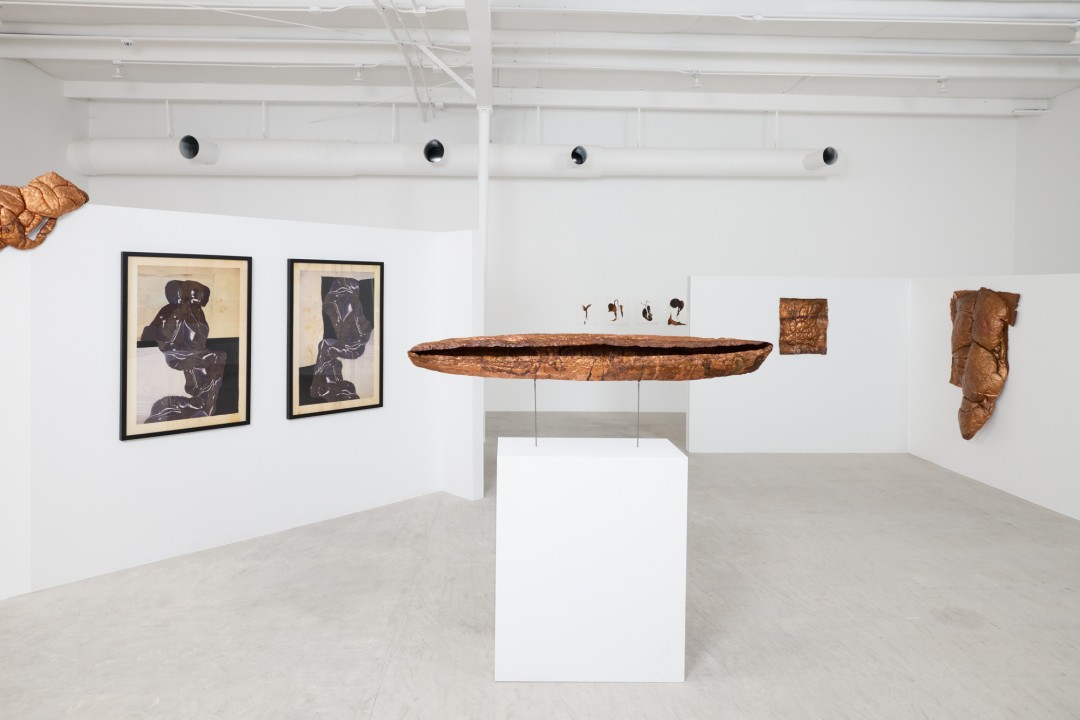
An Incoherent Body presented newly commissioned works by hana kostis developed during a six-month residency at the Institute of Contemporary Art Santa Fe. Bringing together copper sculptures, ink studies on paper, and archival prints, the exhibition explored the body and the subject as conditions of continual disorganization and articulation.
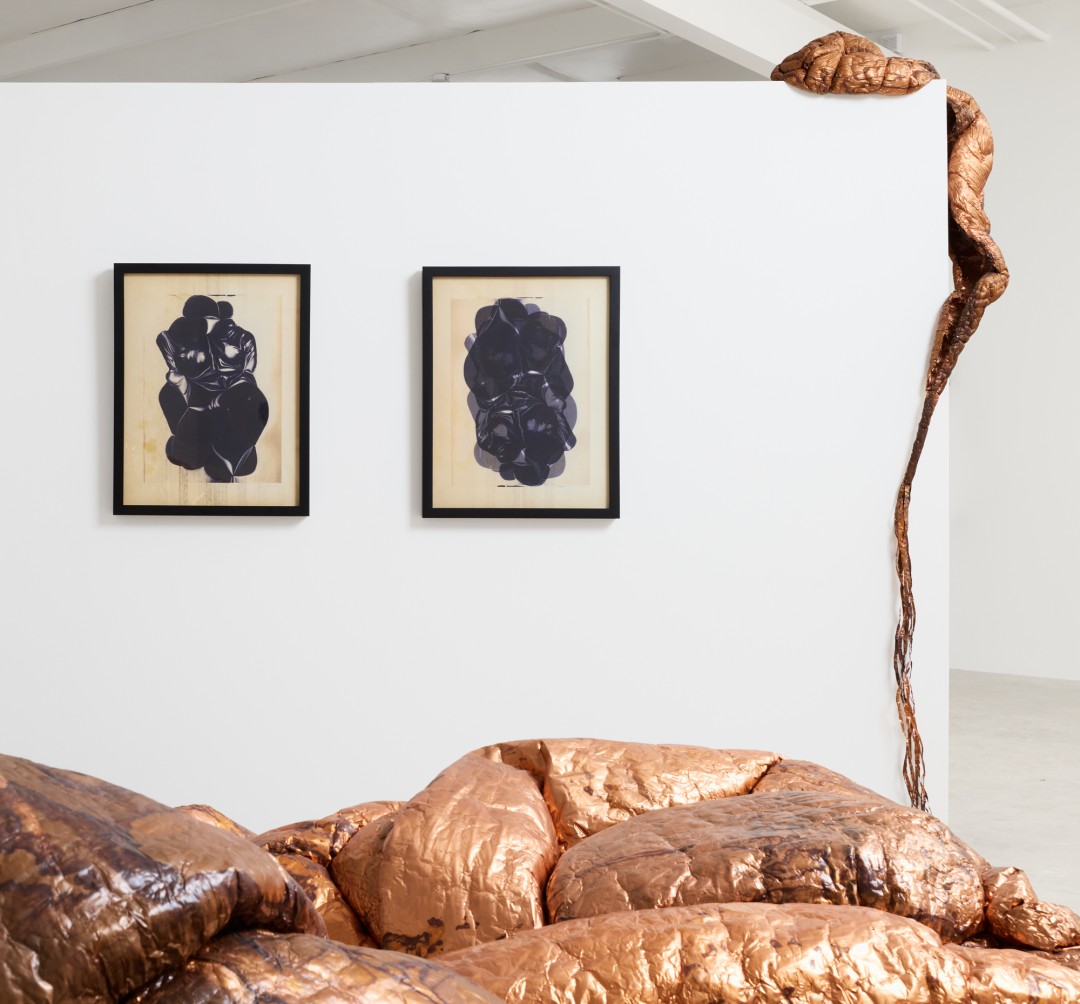
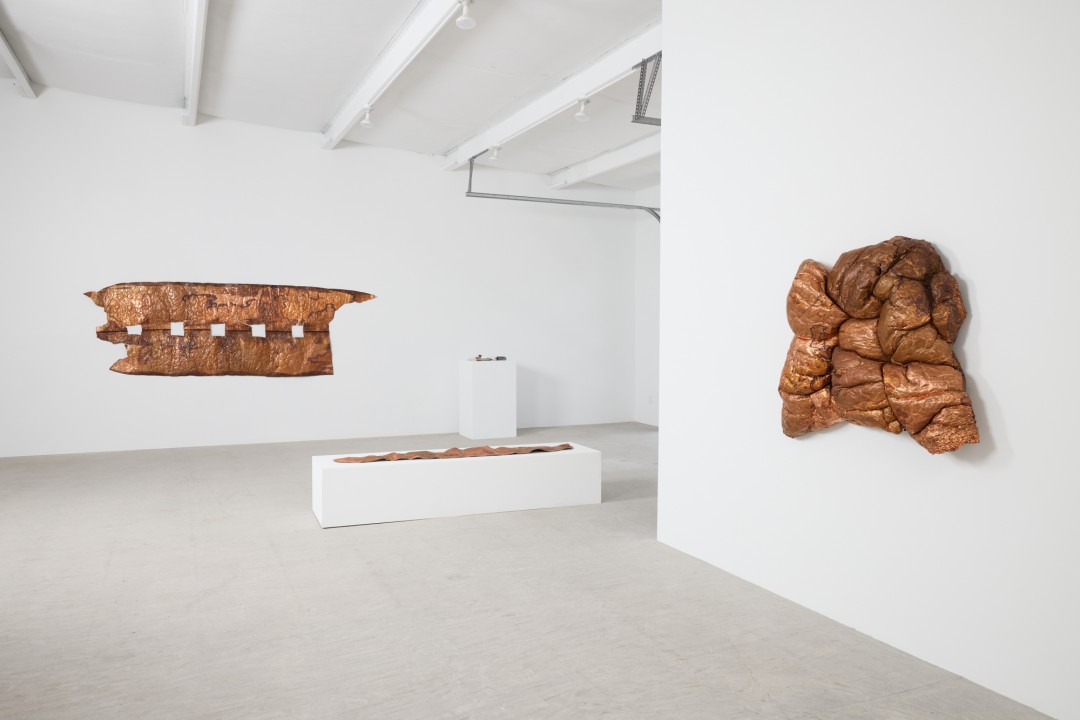
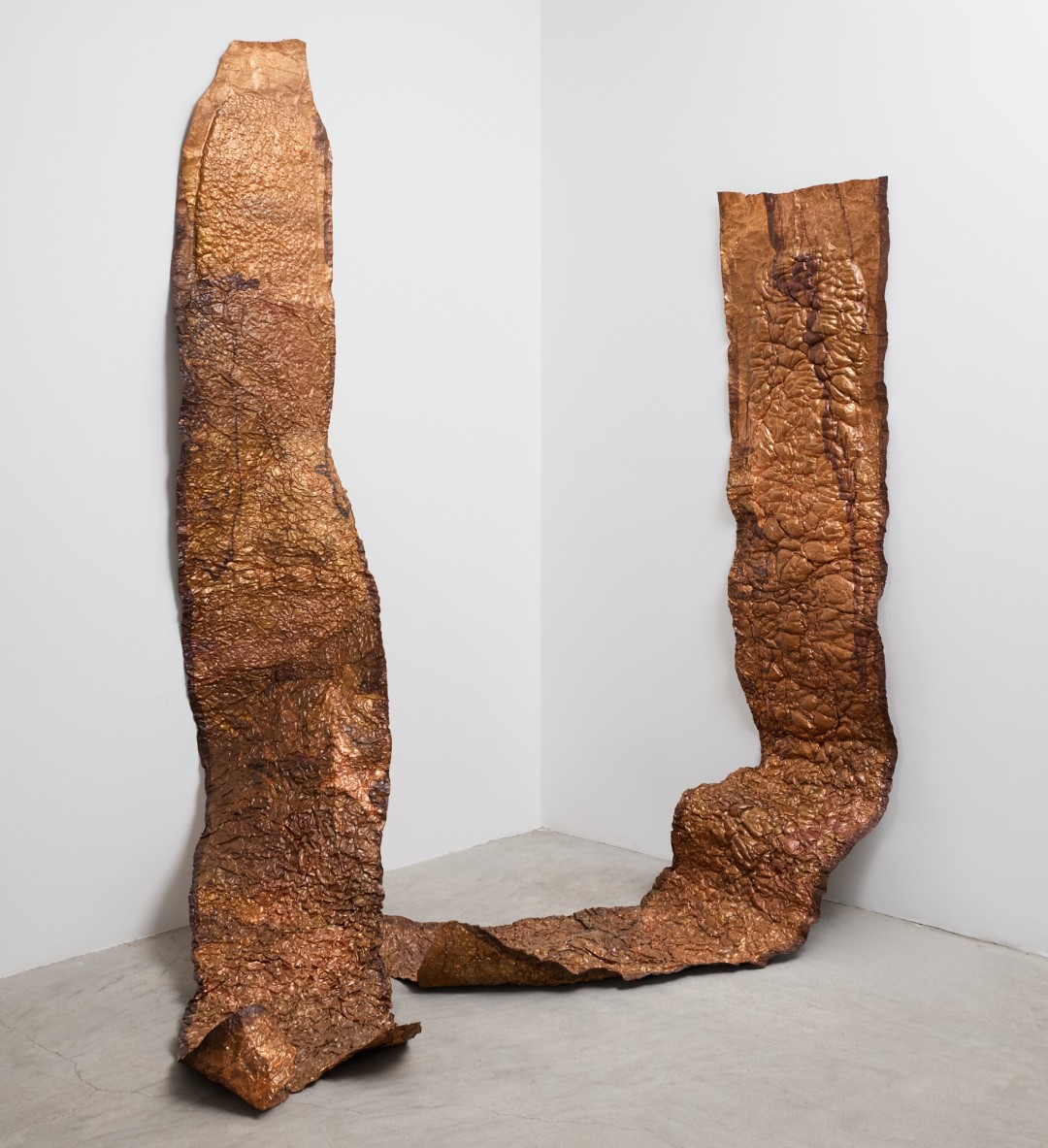
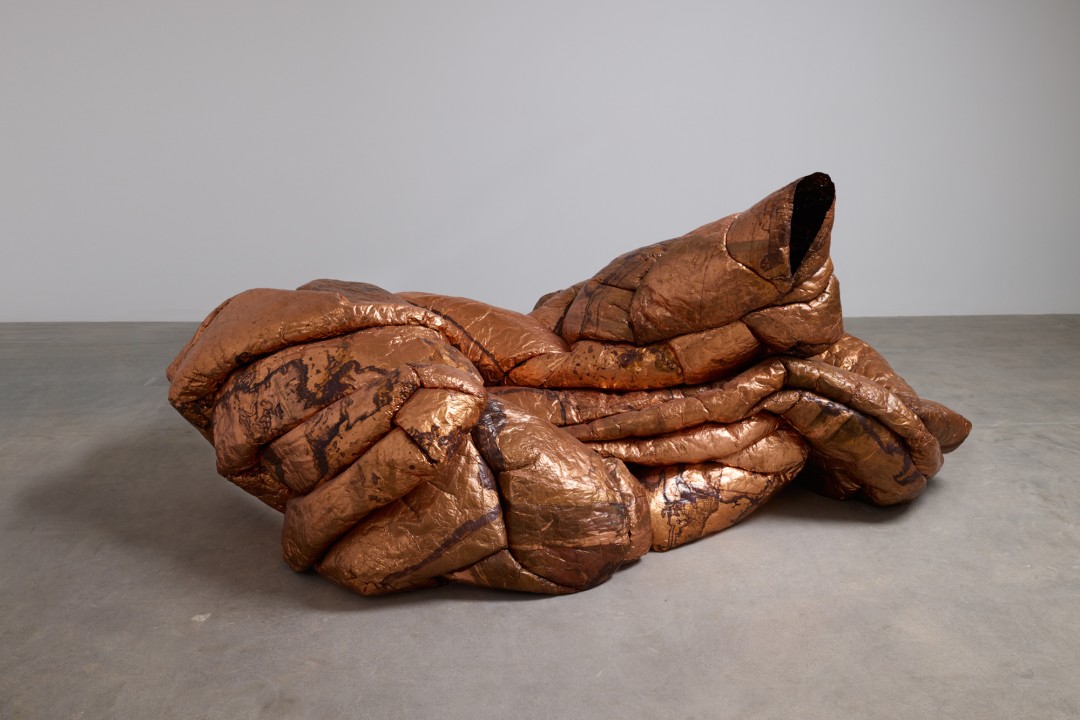
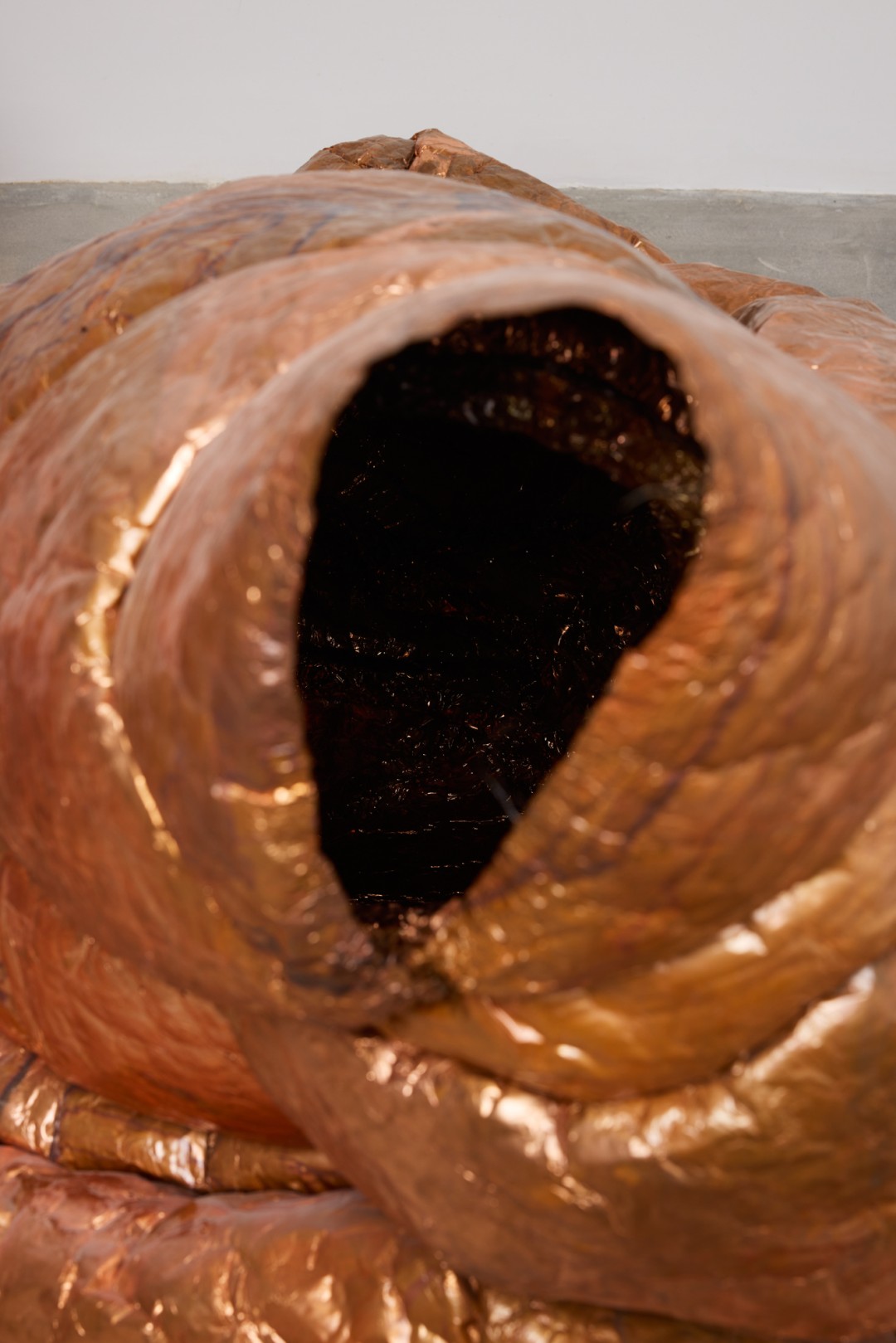
kostis created seventeen new sculptures that invite the figure to be understood as a series of abstract forms. Made from thin sheets of copper, the surfaces of these bodies were painstakingly marked by the artist through a meticulous process of repoussé. Repeated indentations create scars, goosebumps, pores, and other textures across what becomes skin. As the largest organ of the human body, skin acts as organizer, signifier, boundary, and protector all at once.
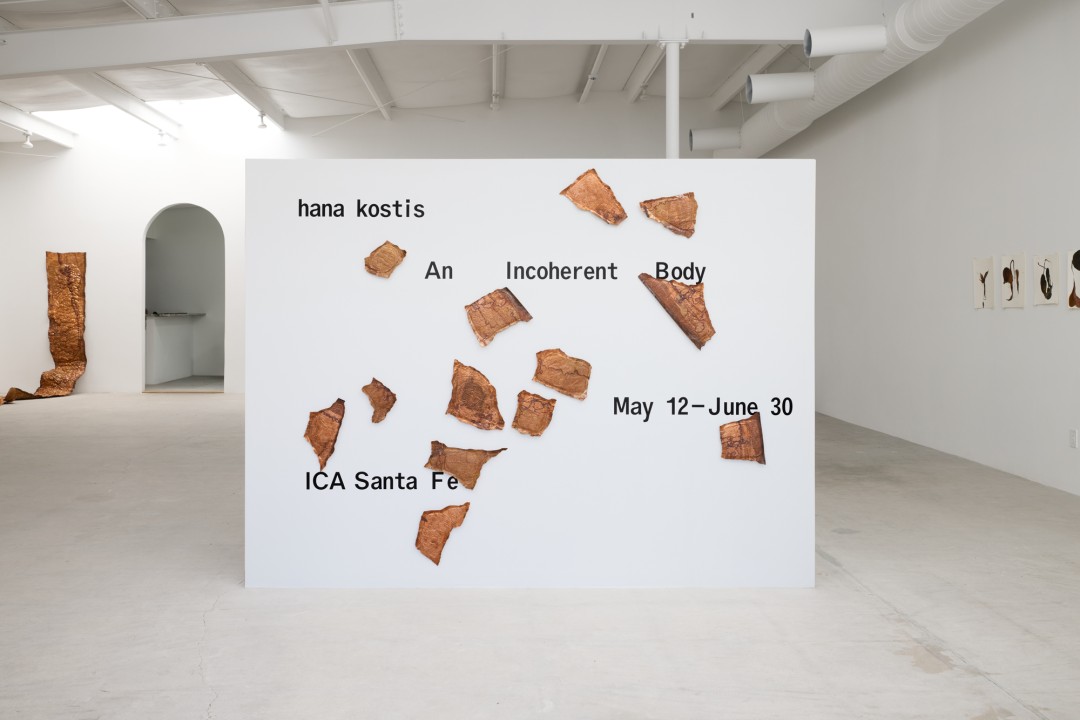
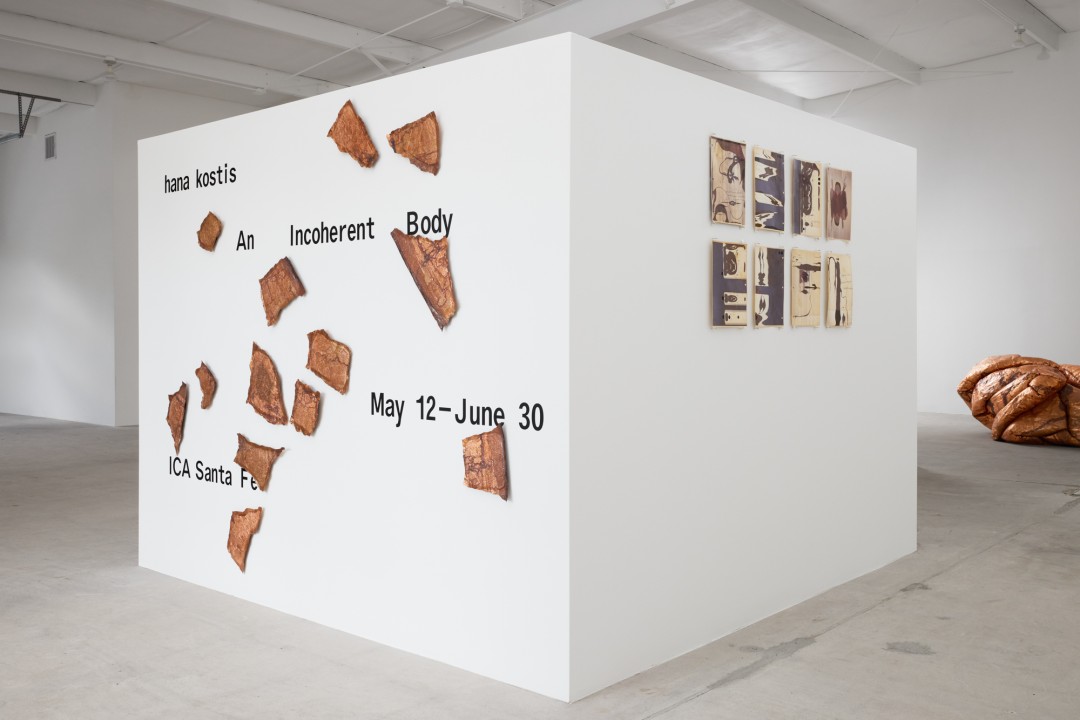
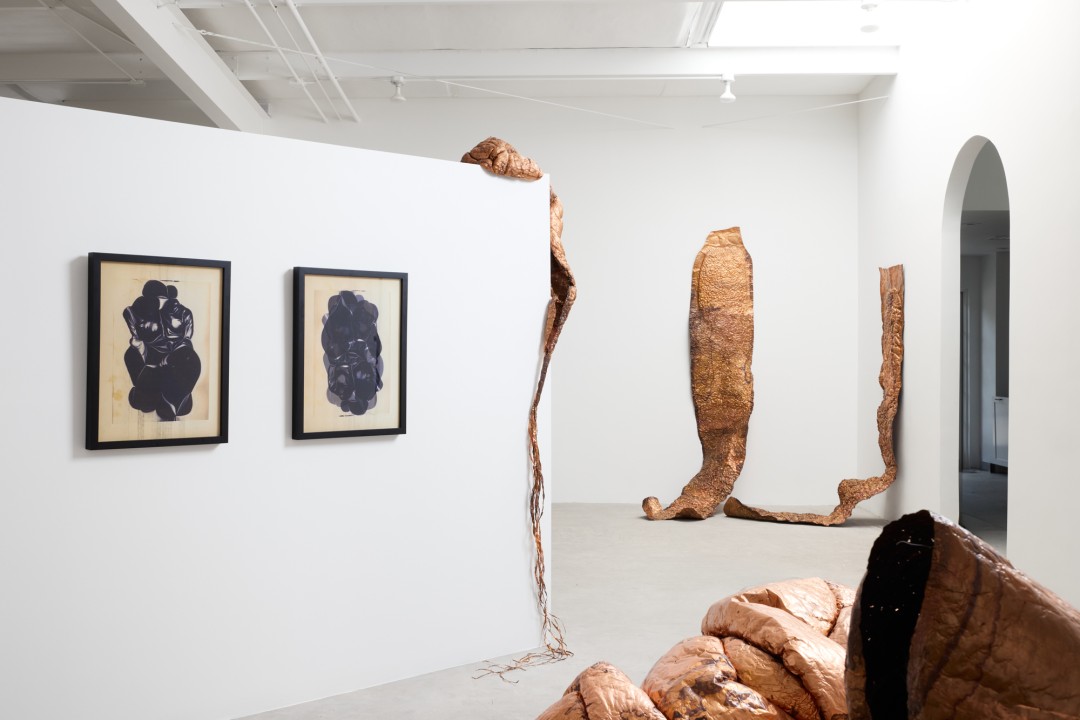
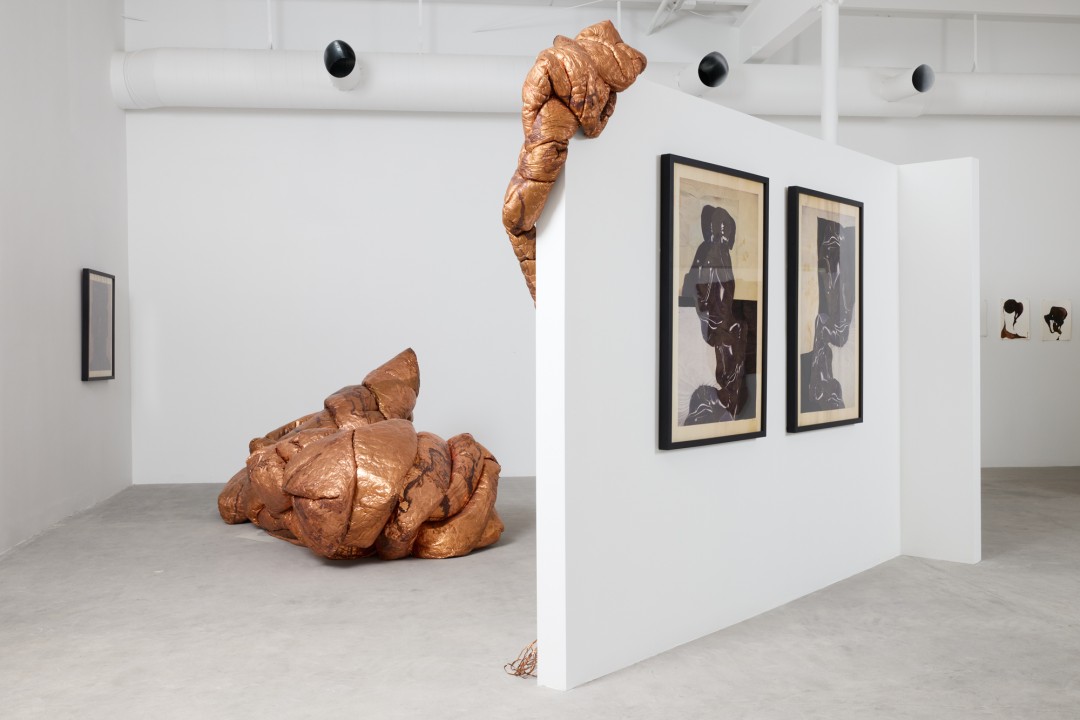
Installed across the title wall, thirteen copper works collectively titled Skins could be understood as fragments of a fractured body or parts of larger, unrecognizable forms. In Sinew, an etched, rope-like sculpture connects to the gallery’s architecture, proposing an organic interference with its hard surfaces. Works including Lung, Pineal, Cocoon, Sweet Breads, and Pons evoke organs and biological processes without settling into direct representation. Their forms remain simultaneously internal and external, familiar and indeterminate, each caught in a process of becoming.
The surfaces of the sculptures reveal a physical and reciprocal exchange between kostis and the copper. The artist presses, folds, stretches, sews, scrapes, and repeatedly punctures the metal, working with its existing oxidization while introducing new patinas, waxes, inks, and lacquers. As kostis explains, “There’s a push-pull between my will or my inflection, what’s actually possible and what the material wants to do. We’re pushing against each other, and also pushing against ourselves.” Each gesture responds to the decisions that came before it, allowing the material to actively shape the work and the artist making it.
The exhibition’s largest sculpture, A Body without Organs, was constructed by sewing together sheets of copper from inside the form. When the work was finished, kostis physically emerged from the sculpture. “The sculptures are also making me,” they said. “They are birthing me. I am coming out of them as much as they come out of me.” The work draws its title from Gilles Deleuze and Félix Guattari’s A Thousand Plateaus and their concept of the “body without organs,” itself taken from Antonin Artaud’s 1947 radio play To Have Done with the Judgment of God. In the exhibition, the body without organs becomes a means of thinking beyond the body as a fixed or automatically organized structure.
The copper sculptures were shown alongside ink studies and works incorporating archival images. Ink Study 1–7, the first works kostis made at ICA Santa Fe, depict a transformation from embryo to flower. In Notes on the Body, the artist printed onto pages from a found botanical field notebook. Faint residues remain where plants were once pressed into the paper, creating flower ghosts that kostis expands through the printing process.
Other works began with images sourced from the vintage fetish magazines AtomAge and The Rubberist. The figures wear leather, latex, and rubber costumes that constrain, conceal, and fully encapsulate their bodies. Digitally distorted, reprinted, doubled, layered, and painted with sumi ink, these images consider the second skin as a structure through which the body can be obscured, reorganized, or made into another identity.
Across the exhibition, kostis considers the body on multiple levels: as figure, organism, process, system, and subject. Biological and conceptual flows move through the works, including blood, rivers, traffic, circulation, capital, and the transfer of energy from one point to another. Through copper, paper, archival images, and repeated physical gestures, An Incoherent Body refuses the body as a stable or complete form. Instead, it appears as something continually made and unmade through desire, material, constraint, and transformation.